Understanding Thanksgiving as a Newcomer
Thanksgiving falls on October 12 this year. For many newcomer families, it’s a holiday they’ve heard of but never quite celebrated, part harvest festival, part family reunion, part long weekend. Our teams have been fielding the same handful of questions every October, so we’re answering them here.
Canadian Thanksgiving traces back to harvest celebrations brought by early settlers, and it has since grown into something less religious and more communal: a day set aside to slow down, share a meal, and take stock of the year so far. Unlike the American holiday it’s sometimes confused with, Canadian Thanksgiving falls in October rather than November, is quieter in tone, and comes with far less pressure around exactly how it’s marked. For newcomer families still finding their footing, that flexibility is worth knowing about going in.
“This Thanksgiving, we’re grateful for our CCS team, our volunteers, our student placements, our donors, and our community partners. Belonging in Canada is built by all of you, together, all year long.”
Three Things to Know About Thanksgiving in Canada
1. It’s a statutory holiday in most provinces
Schools, government offices, and many workplaces close on the Monday, giving most families a three-day weekend. The exception is Atlantic Canada, where Thanksgiving isn’t a mandatory holiday for private employers, so hours can vary. If you’re new to a job, it’s worth confirming with your employer well before the long weekend rather than assuming the office is closed. If your children are in school, expect the Friday before or the Monday itself to sometimes include a class activity or craft tied to the harvest theme, a nice, low-pressure way for kids to pick up the tradition without a family needing to host anything at home.
2. The meal is flexible
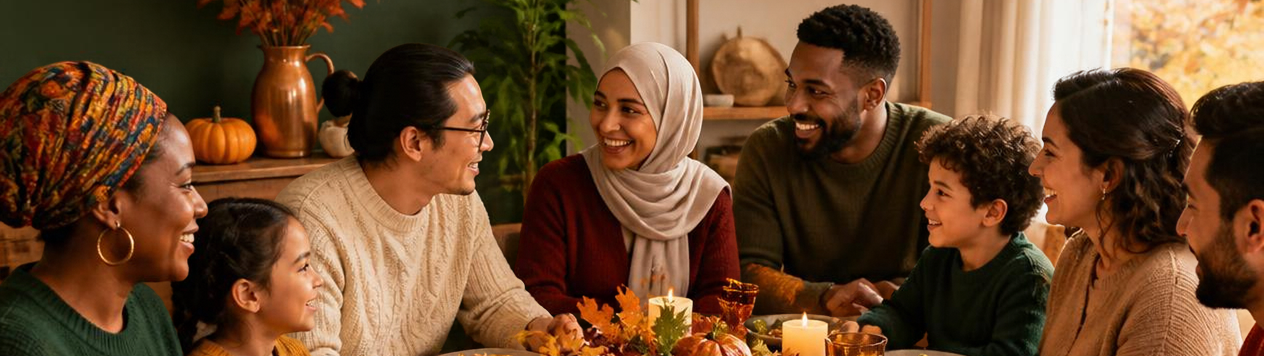
Turkey with stuffing, mashed potatoes, and pumpkin pie is the classic image, but there’s no single “correct” way to mark the day. Plenty of Canadian families roast a chicken instead, skip the bird entirely, or build the meal around dishes from their own culture. What matters more than the menu is the gathering itself: setting time aside, sitting down together, and treating the meal as an occasion rather than just another dinner. Many CCS families have told us their most memorable Thanksgivings blended a Canadian dish or two, often a pie, with food from home. There’s no rulebook here, and nobody is going to correct your plate.
3. It’s a good weekend to reach out
If you don’t have family nearby, the long weekend can also feel like the loneliest one on the calendar, and that’s worth naming honestly. The good news is that community programs, faith organizations, and cultural associations across the Greater Toronto Area often host shared Thanksgiving meals that are open to newcomers, no membership or long history with the group required. Ask your settlement worker what’s happening near you this year, or keep an eye on our events page, since these community meals tend to be added closer to the date.
However you spend the day, whether that’s a full turkey dinner, a quiet night in, or a shared meal with people you met only this year, Thanksgiving is really just an invitation to pause and notice what’s gone right, even in a year that’s asked a lot of you. That part of it belongs to everyone equally, newcomer or not, and it’s one Canadian tradition that needs no translation at all.